

How We Map Marine Habitats
Multibeam Bathymetry & Backscatter Acquisition
Highresolution multibeam systems collect coregistered bathymetry and backscatter, capturing both seabed morphology and acoustic response at metre to submetrescale resolution. Postprocessing corrects for motion, water column, and radiometric effects to produce terrain models and mosaicked backscatter that reflect true seabed texture and roughness.
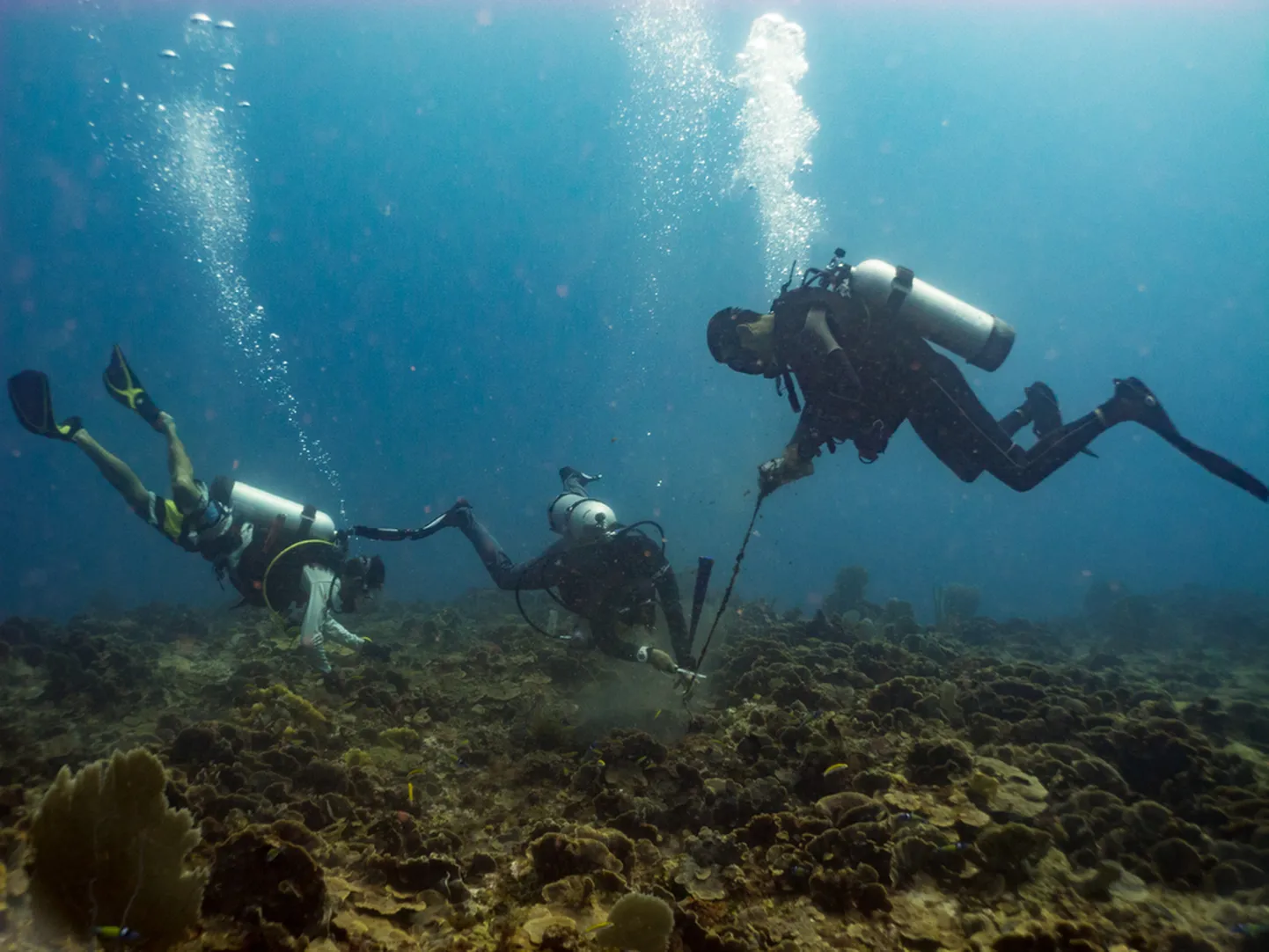
Ground Truthing with Video & Samples
Targeted video/stills transects and physical samples (grabs, cores) provide direct evidence of substrate, fauna, and habitat types at representative locations. These observations are linked to acoustic signatures to train and validate classification models, ensuring that mapped classes correspond to real seabed conditions.
Supervised Classification & Standardised Schemes
Bathymetric derivatives (slope, rugosity, curvature) and backscatter metrics are combined with groundtruth data in supervised machinelearning workflows such as Random Forests to predict habitat classes across the full survey area. Outputs are organised according to recognised frameworks (e.g., EUNIS or national habitat schemes) so they can be directly used in EIAs, conservation planning, and regulatory submissions.
Aligned Mapping for EIA & Marine Planning
Habitat mapping workflows are aligned with the needs of environmental regulators, marine spatial planners and other stakeholders from the outset, ensuring outputs are directly usable in EIAs, marine protected area design, and spatial planning decisions. Scientific datasets are integrated with local ecological knowledge and sea use informtion so resulting maps reflect measured habitats.