How We Monitor Subsea & Marine Assets
Sensor Networks on and Around the Asset
Dedicated monitoring packages are installed on pipelines, risers, moorings, foundations, and structures—measuring strain, vibration, inclination, pressure, temperature, and other key parameters. Autonomous seabed nodes and clampon modules are engineered to withstand deepwater pressures and harsh marine environments while logging and transmitting highquality data over months to years.
Real Time Streaming to Shore
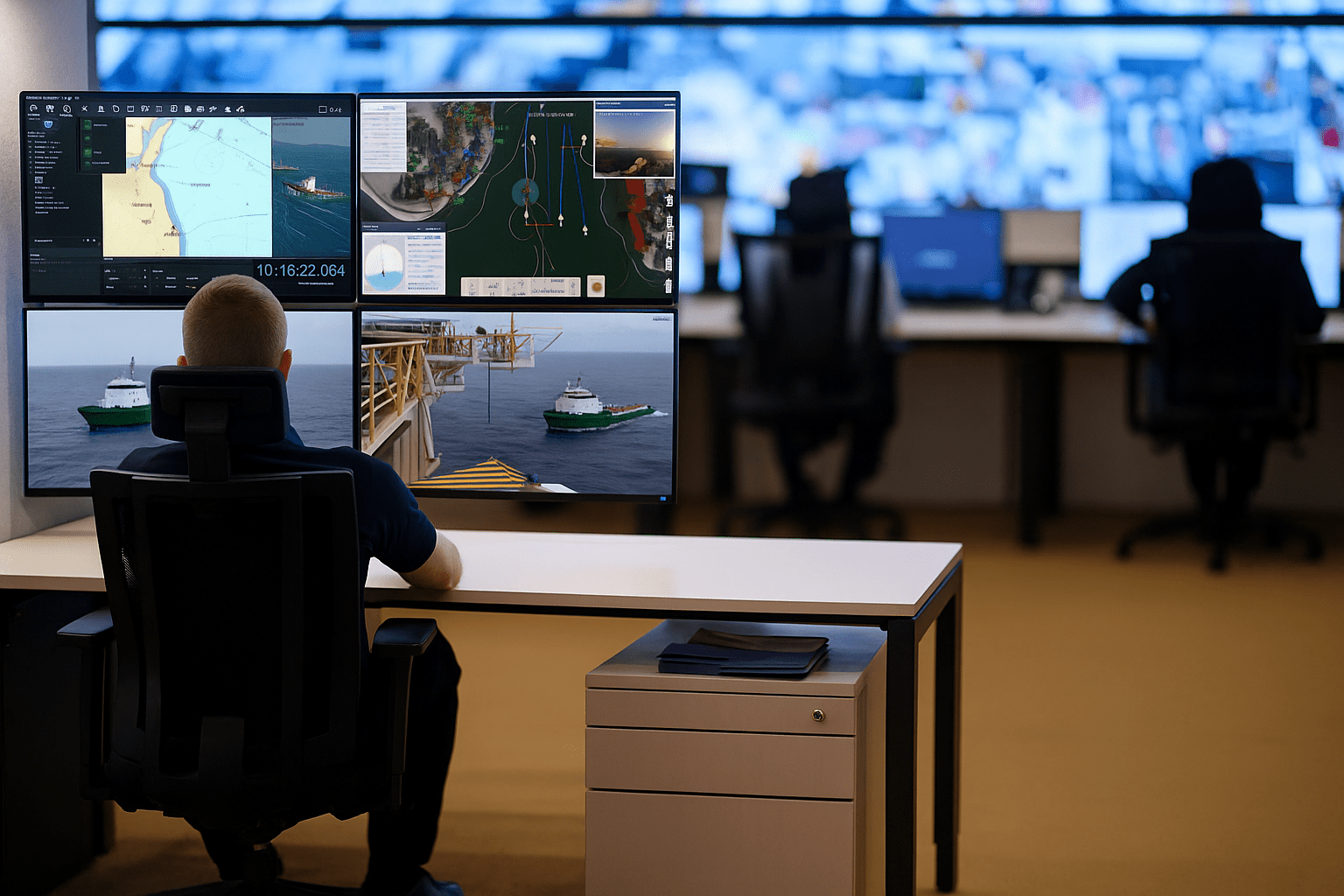
Subsea data and live video/sonar are streamed via fibre, acoustic links, or vessel gateways into secure cloud or onpremise platforms that can be accessed from onshore control rooms and engineering offices. Low latency streaming solutions support SDto4K video with synchronised sensor feeds, enabling remote experts to participate in operations and inspections without mobilising offshore.
Analytics & Digital Twin Integration
Incoming data feeds are time aligned, quality checked, and ingested into analytics engines and digital twin models that compare live responses against design envelopes, alarm thresholds, and predicted behaviours. Automated alerts highlight excursions in motion, tension, strain, or temperature, while trend analysis exposes creeping changes such as pipeline walking, mooring degradation, or fatigue hotspots.
Remote & Hybrid Monitoring
Remote monitoring is configured to support both long term surveillance and short, high intensity campaigns such as cable lay, pull ins, or critical operations. Live catenary and touchdown monitoring, for example, combines 3D sonar, motion sensors, and vessel data to control lay parameters in real time and capture a complete digital record of the operation.