

Success Stories
In-depth insights from our successful projects and the measurable impact we've delivered for our clients
Integrated 3D Engineering for Brownfield Upgrades
Transforming a complex brownfield upgrade through advanced 3D engineering and a fully integrated geospatial platform. Our team combined laser scanning, intelligent modelling, digital twins, and system integration to derisk construction, eliminate clashes, and give every stake holder a live, engineering grade view of the asset.
1. Challenge
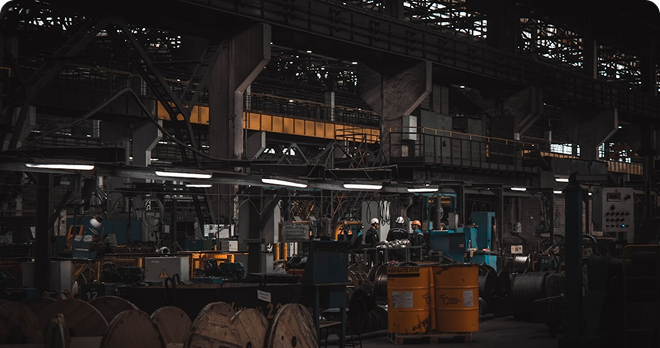
A regional energy operator managed three aging processing facilities with decades of incremental modifications, incomplete asbuilt drawings, and multiple, unconnected engineering and operations systems. Engineering teams relied on outdated 2D drawings and isolated 3D models, while operations depended on SCADA, EAM/CMMS, and spreadsheets that were not spatially linked. This fragmentation created significant risk for planned debottle necking and equipment replacement projects: clashes were routinely discovered late in the field, tiein points were not where drawings indicated, and work packs had to be reissued after site checks. Each shutdown carried the risk of extended downtime and cost overruns due to rework and unexpected field conditions. The operator needed a way to unify engineering data, site reality, and operational systems into one trusted environment before committing to the next wave of brownfield upgrades.
2. Our Approach & Solution
- First, our engineering survey team executed a coordinated 3D laser scanning campaign across all three facilities, capturing dense point clouds of structures, piping, cable racks, and equipment with milli metre level accuracy. Using these point clouds, engineering specialists developed intelligent 3D models and reconciled them with legacy CAD, P&IDs, and vendor data to create an accurate, engineering grade representation of each plant.
- In parallel, we stood up an Enterprise Geospatial Data Hub to host all spatial content—facility models, underground utilities, corridors, and environmental constraints—and linked it with the new 3D models. On top of this, we built an integrated digital twin environment that blended CAD/BIM, survey, monitoring data, and analytics into a single interactive 2D/3D web interface accessible to engineering, operations, and management.
- To connect the twin to day to day operations, we designed and documented integration patterns and APIs between the hub and the client’s GIS, EAM/CMMS, SCADA, ERP, and document systems. Asset IDs and data contracts ensured that a pump, line, or valve was represented consistently across the twin, maintenance records, realtime telemetry, and cost centres. Web based 2D/3D viewers and role based dashboards exposed this integrated data to non specialists, supporting shutdown planning, tiein reviews, and HAZOP workshops without requiring specialist desktop tools.
3. Technologies & Methodologies
4. Results & Impact:
- Engineering Certainty: With an engineering grade digital twin aligned to live operations data, design teams could rehearse tieins, validate access routes, and run clash checks in a realistic context before any steel was cut, reducing engineering revisions and field changes by an estimated 60 percent across the first upgrade wave.
- Faster Shutdown Planning: Multi discipline teams used the webbased 3D viewers and dashboards to coordinate work fronts, check isolation points, and review simultaneous operations in a shared environment, cutting planning cycles and significantly reducing latestage design queries. Shutdown windows were met without additional extensions, avoiding unplanned production losses.
- Integrated Asset View: By linking the twin with EAM/CMMS, SCADA, and ERP, the client achieved a single, location aware view of assets—from realtime process conditions and alarms to maintenance history and cost data—accessible via intuitive map and 3D interfaces. This improved work prioritisation, reduced unnecessary site visits, and supported more defensible risk and investment decisions.
- Platform for Future Innovation: The same engineering and integration backbone now supports upcoming initiatives such as predictive maintenance, cityscale corridor planning, and further digital twin rollouts, without rebuilding integrations or data models from scratch. The client has effectively converted a one off brownfield project into a reusable, enterprise wide digital engineering platform.
5. Conclusion
This case illustrates how your combined services in engineering, digital twins, geospatial platforms, and system integration can transform brownfield upgrades from drawingdriven, highrisk projects into datadriven, predictable programs. By capturing reality with laser scanning, building precise engineering models, standing up an enterprise geospatial hub, and integrating with core IT/OT systems, the team delivered a live, engineeringgrade digital twin that supports both project execution and ongoing operations. The result is a scalable template for future projects: a repeatable, engineeringled integration approach that turns complex assets into continuously trusted digital environments—ready for shutdown planning, optimisation, and AIdriven decisionmaking across your clients portfolios.
Trusted by Industry Leaders
We partner with offshore operators and pipeline companies to deliver precision survey solutions.

Offshore Operations
Major offshore oil and gas operators trust our survey technology for critical infrastructure projects.

Pipeline Companies
Leading pipeline infrastructure companies rely on our precision mapping and underground utility services.

Engineering Firms
Engineering consultancies partner with us for accurate survey data and 3D modeling services.
IMPACT

Timeline
Comprehensive survey results delivered in six weeks.

Deliverables
Topographical drawings, digital terrain models, contour maps, longitudinal profiles, 2D & 3D underground utility maps.

Safety
Avoided potential hazards and optimized pipeline route.

Cost-Efficiency
Achieved significant cost savings and reduced construction time.

Technology
Utilized advanced tools like LiDAR and GPR.

Efficiency
Enhanced data collection and analysis processes.