

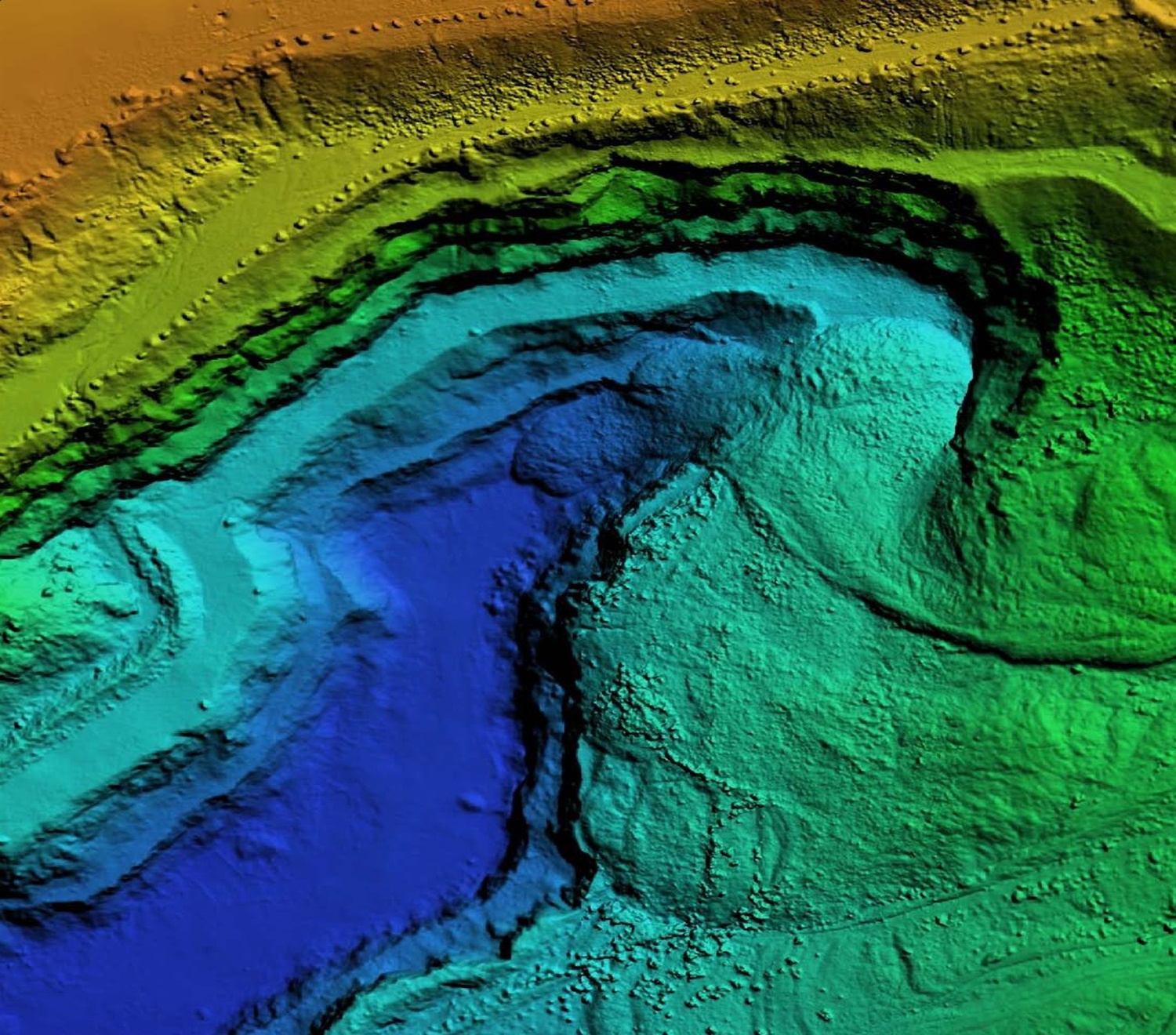
How We Survey the Seabed: Precision Below the Waterline
Multibeam Echo Sounders MBES
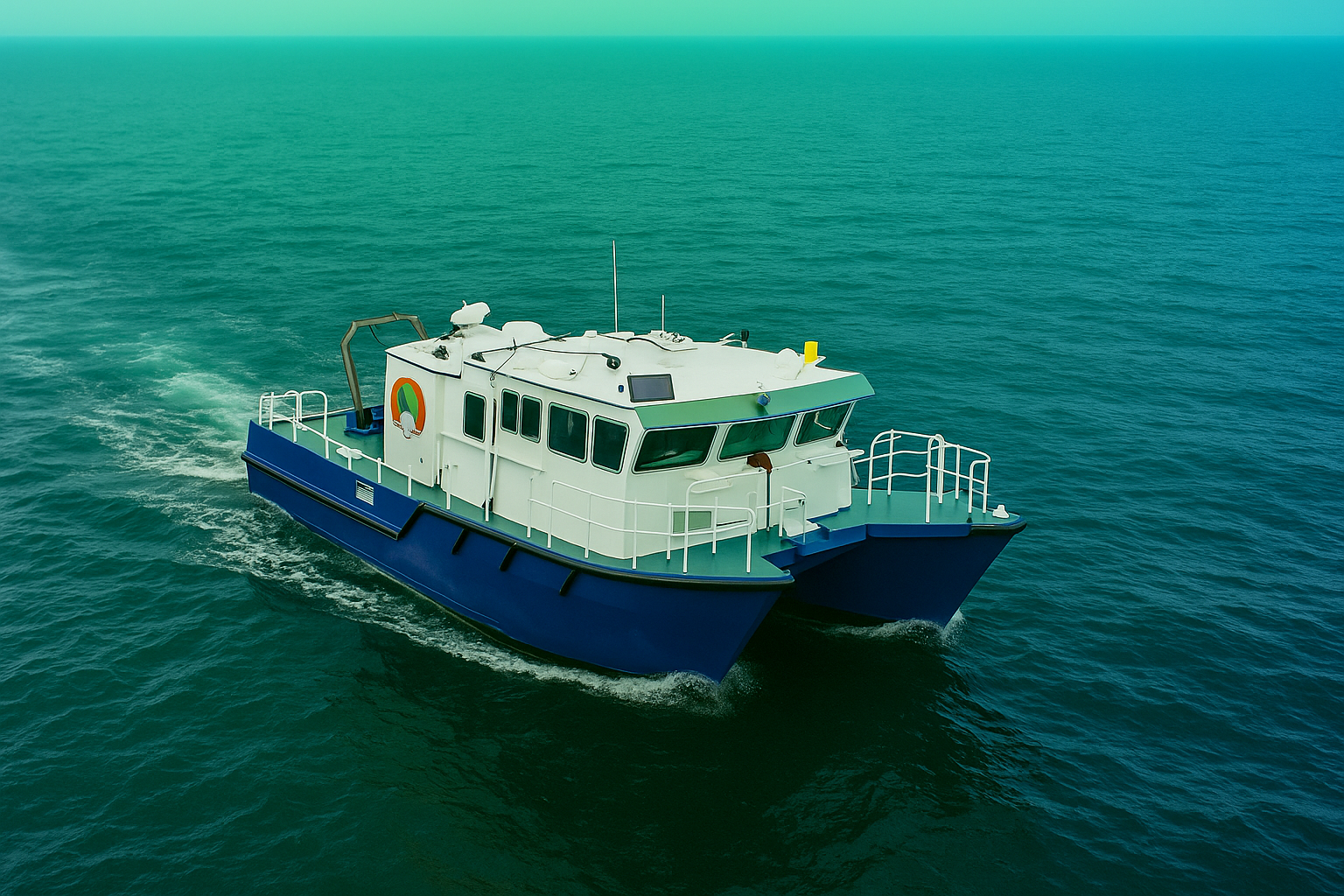
Full-swath bathymetric mapping using hull-mounted and pole-mounted multibeam systems operating from 100 kHz
to 700+ kHz — achieving centimeter-level depth accuracy with 100% seabed coverage in a single vessel pass.
MBES simultaneously captures co-registered bathymetry and backscatter data, delivering both depth models and
seabed classification from one sensor deployment. Ideal for port basins, navigation channels, offshore
development zones.
Topobathymetric LiDAR
Airborne laser systems emitting dual-wavelength (green 532 nm / NIR 1064 nm) pulses that penetrate water to
map both terrestrial topography and shallow-water bathymetry in a single seamless dataset. Capable of
mapping up to 15 m below the water surface at 200+ points per square meter with ±2 cm vertical accuracy —
filling the critical “land-to-sea gap” where vessel-based sonar cannot safely operate and terrestrial LiDAR
cannot reach.
Autonomous Underwater Vehicles
Untethered, pre-programmed robotic platforms equipped with multibeam, side-scan, sub-bottom, camera, and
environmental sensors — operating at depths from 10 m to 6,000+ m without surface vessel tethering
constraints. AUVs deliver higher-resolution data than hull-mounted systems by flying closer to the seabed,
achieving centimeter-scale resolution for detailed inspection, pipeline survey, and deep-water mapping
missions.
Hybrid Marine Workflows
Our most complex offshore projects combine all platforms into a single georeferenced marine dataset.
Multibeam provides full-coverage bathymetry, side-scan adds object detection and habitat classification,
sub-bottom reveals shallow geology, topobathymetric LiDAR bridges the nearshore gap, and AUVs deliver
close-range inspection detail — all registered into one seamless, IHO-compliant survey-controlled marine
model.













 Doha, Qatar
 GMT-3
GMT-3
