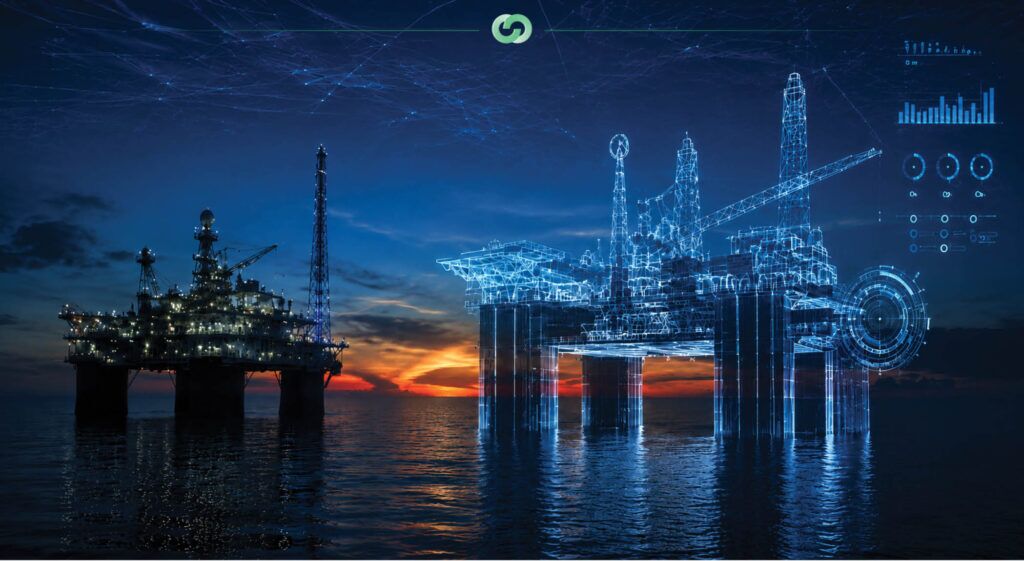
Reality capture technologies such as 3D laser scanning, mobile mapping, and photogrammetry are increasingly used to create high‑fidelity digital representations of industrial assets, infrastructure, and buildings. When these geometrically accurate models are connected to real‑time data, analytics, and domain logic, they evolve into digital twins that provide operational intelligence across the full asset lifecycle. This paper examines the technical path from 3D laser scanning to operational digital twins, focusing on data acquisition, processing workflows, information integration, and industrial use cases. It also outlines challenges and best practices for organizations seeking to move from one‑off scan projects to sustainable, operations‑grade digital twin programs.
- Introduction
Digital twins are commonly defined as virtual representations of physical assets or systems that are continuously updated with data from sensors, control systems, and enterprise applications. In industrial and infrastructure contexts, digital twins enable simulation, optimization, and decision support for operations, maintenance, and capital projects.
However, a twin’s usefulness is bounded by the fidelity of its underlying representation of the physical world. Reality capture-using technologies such as terrestrial laser scanning, mobile SLAM, aerial LiDAR, and photographic reconstruction has emerged as the most robust way to generate accurate 3D geometry and context for digital twins. This article addresses how 3D laser scanning data is transformed and integrated to deliver not just geometric accuracy but operational intelligence.
- Reality Capture and 3D Laser Scanning
2.1 Reality capture technologies
Reality capture refers to the set of devices and processes used to digitize physical environments—ranging from small components to factories, offshore platforms, and large civil sites. The Digital Twin Consortium (https://www.digitaltwinconsortium.org/) describes reality capture as a critical component in the lifecycle of a digital twin, providing geometry, context, and conditions that may not exist in design models or asset registers.
Principal technologies include:
- Terrestrial laser scanning (TLS) – static LiDAR instruments capturing dense point clouds with millimetre‑ to centimetre‑level accuracy over ranges of tens to hundreds of metres.
- Mobile mapping and SLAM – vehicle‑mounted or wearable systems that combine LiDAR with inertial sensors to capture as‑operated environments such as production lines, corridors, and tunnels.
- Aerial LiDAR and photogrammetry – airborne or drone‑mounted sensors used for corridors, facilities, and terrain at larger scales, often fused with ground data for completeness.
2.2 3D laser scanning data characteristics
3D laser scanners emit pulses or continuous beams and measure their return time or phase shift to compute dense 3D point clouds representing surfaces in Cartesian space. Industrial workflows routinely generate billions of points across multiple scanning stations, which must be registered into a common coordinate system and quality‑controlled for noise, drift, and coverage gaps.
Laser scanning best‑practice guides emphasize:
- Appropriate scanner selection and calibration for range, accuracy, and environment.
- Rigorous planning of scan positions and overlaps, especially in occluded or congested areas.
- Robust registration workflows (target‑based, cloud‑to‑cloud, or hybrid) with quantified residuals.
These practices are essential because geometric fidelity directly influences the reliability of subsequent models and the digital twin’s utility.
- From Point Clouds to Structured Geometric Models
3.1 Registration and normalization
The first technical step from scanning to twin is registration—merging individual scan stations into a unified, georeferenced point cloud that accurately represents the asset. Registration typically involves:
- Initial alignment via spheres, checkerboards, or survey control.
- Fine cloud‑to‑cloud adjustment using iterative closest point (ICP) algorithms.
- QA/QC via residual analysis, loop closure checks, and deviation maps.
The resulting point cloud is then cleaned (removal of transient objects, noise, and outliers) and exported in formats such as E57, LAS, or RCP for use across BIM, CAD, and analysis platforms.
3.2 Scan‑to‑BIM and plant modeling
Point clouds are inherently unstructured; digital twins require semantically rich models. Scan‑to‑BIM workflows convert point clouds into object‑based representations—walls, slabs, steel members, pipes, equipment, and architectural elements—within BIM or plant design tools.
In industrial environments, scan‑to‑BIM and plant modeling are used to:
- Generate as‑built models of factories and process plants with explicit equipment and MEP systems.
- Parameterize structural and mechanical elements for clash detection, layout optimization, and structural checks.
- Establish LOD (Level of Development) standards so that model content is aligned with use cases, from layout to detailed engineering.
At this stage, the digital artefact is an accurate geometric twin but not yet “operational”: it is still primarily used for engineering design, planning, and construction coordination.
- Digital Twin Architecture for Operational Intelligence
4.1 Conceptual architecture
Operational digital twins overlay the geometric baseline with time‑varying data streams, business logic, and analytics. A typical architecture includes:
- Geometry and context layer – scan‑derived models, BIM, GIS layers, and imagery representing physical layout.
- Data integration layer – connectors to SCADA/DCS, historians, MES, ERP, CMMS, and IoT platforms supplying live and historical measurements.
- Analytics and simulation layer – physics‑based models, process simulations, machine‑learning models, and rule engines for prediction and optimization.
- Interaction layer – 3D viewers, dashboards, AR/VR interfaces, and APIs that expose the twin to engineers, operators, and external systems.
Reality capture underpins the geometry and context layer but also contributes to analytics (for example, deformation analysis via repeated scans) and validation of “as‑built” versus “as‑designed” states.
4.2 Operational intelligence
Operational intelligence refers to the ability to understand and act on what is happening in the physical system in near real time, combining data from equipment, processes, and context. When a digital twin is continuously updated with sensor and process data, it can:
- Provide real‑time situational awareness of asset status and plant conditions.
- Support “what‑if” scenarios to assess the impact of proposed changes before implementation.
- Detect anomalies, predict failures, and recommend interventions based on empirical patterns and models.
ARC Advisory Group emphasizes that reality‑based capture interlaced with engineering and operational data can address a large majority of practical industrial twin use cases, particularly around monitoring, maintenance, and planning.
- Industrial Use Cases: From Scan to Operational Twin
5.1 Factory and process‑plant optimization
In manufacturing and process industries, reality capture is used to create precise digital twins of production lines and entire plants. Scan‑derived models of factories have been combined with operational data (OEE, energy use, throughput) to:
- Identify bottlenecks and test line reconfigurations virtually before physical changes.
- Plan debottlenecking, retrofits, and new equipment installations against verified as‑is geometry.
- Support VR‑based planning and training in congested or hazardous areas.
Studies and industry white papers report that this approach reduces rework, accelerates shutdown planning, and improves upgrade cycles compared to layouts built on outdated drawings.
5.2 Predictive maintenance and asset reliability
Digital twins integrated with IoT data support predictive maintenance in rotating equipment, utilities, and critical process units. Laser scanning and geometric twins provide accurate equipment context, while data streams from vibration, temperature, and process sensors feed predictive models of remaining useful life and failure modes.
Combining empirical operational data with a digital twin supports:
- Early detection of degradation and incipient faults.
- Condition‑based scheduling of maintenance interventions.
- Continuous optimization of set‑points and operating envelopes.
5.3 Brownfield engineering and energy transition
Legacy facilities often lack reliable as‑built documentation, which complicates revamps, capacity increases, and decarbonization initiatives. Reality capture and scan‑to‑BIM create an accurate baseline for brownfield projects, enabling:
- Safe planning of tie‑ins, reroutes, and modular additions using clash detection against existing geometry.
- Evaluation of options for electrification, waste‑heat recovery, carbon capture, or fuel switching with clear spatial and structural constraints.
- Verification of “as‑built” conditions after modifications, closing the loop between design and operations.
5.4 Safety, training, and remote operations
Accurate digital twins enriched with process data are increasingly used for safety analysis and operator training. Reality capture provides high‑fidelity geometry for:
- Simulating emergency scenarios, access/egress routes, and safe work procedures.
- AR/VR‑based training where operators rehearse tasks in a digital facsimile of the plant.
- Remote inspections and collaboration, reducing the need for personnel exposure in hazardous areas.
- Challenges and Technical Considerations
6.1 Data volume and lifecycle management
High‑resolution scanning campaigns generate large datasets that must be stored, versioned, and curated over the asset lifecycle. Key challenges include:
- Efficient compression, tiling, and streaming of point clouds and meshes.
- Maintaining lineage between raw scans, registered clouds, and derived models.
- Deciding when and how often to re‑scan to keep the twin sufficiently current for its use cases.
6.2 Interoperability and open ecosystems
ARC and other industry groups stress the need for open, sustainable asset digital twins that avoid locking reality capture, engineering models, and operational data into proprietary silos. Guidance from open‑twin working groups recommends:
- Separation of data from specific applications and viewers.
- Use of open or well‑documented formats and APIs for point clouds, meshes, and BIM.
- Architectures that allow multiple tools to consume the same capture outputs and twin services.
6.3 Governance, skills, and organizational adoption
Beyond technology, organizations must address:
- Data governance – ownership, quality standards, and change management across departments.
- Skill gaps – expertise in surveying, point‑cloud processing, BIM, and analytics.
- Process integration – embedding twin usage into workflows for maintenance, planning, and safety rather than treating it as a side project.
Without these, reality capture remains a series of successful pilots rather than the backbone of operational intelligence.
- Conclusion
3D laser scanning and related reality‑capture technologies provide an unprecedented level of geometric accuracy and contextual understanding for industrial facilities and infrastructure. When these data are transformed into structured models and integrated with operational information, they form the backbone of digital twins that deliver real‑time insight and predictive capabilities across the asset lifecycle.
The technical journey from scan to operational intelligence involves more than generating a 3D model; it requires robust capture practices, disciplined data management, open integration architectures, and organizational commitment to embedding twins into day‑to‑day decision making. As best‑practice guidance and tooling continue to mature, the convergence of reality capture and digital twins is poised to become a standard component of how complex assets are engineered, operated, and continuously improved.
Why Choose GeoSoft Global for 3D Laser Scanning Services?
Choosing GeoSoft Global for 3D laser scanning gives asset owners and EPCs several strategic advantages:
- Three decades of industry experience in energy, offshore, and industrial projects.
- Integrated services across 3D laser scanning, dimensional control, subsea surveys, geospatial mapping, BIM, and digital twin development.
- Proven delivery in the Middle East, US, and Europe, with a track record of supporting major offshore deck installations and complex survey assignments.
- Strong digital‑transformation capability, connecting reality capture with enterprise‑level digital platforms and performance‑twin solutions.
Frequently Asked Questions About 3D Laser Scanning
- What is 3D laser scanning and how does it work?
3D laser scanning is a reality‑capture technology that uses laser beams to measure millions of points on visible surfaces, creating a precise 3D “point cloud” of an asset or environment. The scanner rotates and collects XYZ coordinates for each point, which are then registered into a unified dataset for measurement, modelling, and analysis.
- What types of projects does GeoSoft Global support with 3D laser scanning?
GeoSoft Global provides 3D laser scanning for industrial plants, offshore platforms, onshore oil and gas facilities, factories, utilities, buildings, and infrastructure assets. We support projects across the Middle East, US, and Europe for brownfield engineering, revamps, digital twins, and large‑scale infrastructure upgrades.
- How accurate is 3D laser scanning?
Survey‑grade 3D laser scanners can achieve single‑point accuracies in the millimetre range, and best‑practice registration workflows often keep overall network error within a few millimetres. This level of precision is suitable for dimensional control, clash detection, fit‑up verification, and high‑value retrofit work.
- What deliverables can I expect from a 3D laser scanning project?
Typical deliverables include registered point clouds, 3D BIM or plant models, 2D plans and sections, isometric drawings, steel and piping models, and digital‑twin‑ready geometry. GeoSoft Global tailors deliverables to your workflow—such as Revit, Navisworks, AutoCAD, AVEVA, or open formats like IFC.
- How is 3D laser scanning different from traditional surveying?
Traditional surveying captures discrete points and lines, while 3D laser scanning captures full‑field geometry, recording millions of points on every visible surface. This results in more complete as‑built data, improved context for design, and fewer return visits to site for missed measurements.
Read our blog: Benefits of 3D Laser Scanning for Industrial Facilities
- Can 3D laser scanning help with scan‑to‑BIM and digital twins?
Yes. 3D laser scanning is the foundation of scan‑to‑BIM workflows, where point clouds are converted into accurate BIM models for existing assets. The same geometry can be enriched with operational and asset data to create digital twins that support maintenance, simulation, and performance analytics.
- Is 3D laser scanning safe for operating facilities?
3D laser scanning is non‑contact and can often be performed while facilities remain in operation, with surveyors positioned at safe distances. This reduces the need for scaffolding, working at height, and exposure to hazardous areas compared with manual measurement methods.
- How long does a typical 3D laser scanning project take?
Project duration depends on site size, access, and required detail, but scanning is usually much faster than manual methods because modern scanners capture hundreds of thousands to millions of points per second. GeoSoft Global will define a project‑specific schedule during scoping, including scanning, registration, and modelling milestones.
- In which regions does GeoSoft Global offer 3D laser scanning services?
Geosoft Global delivers 3D laser scanning and related services across the Middle East (including UAE and wider Gulf region), as well as in Europe and North America through its international operations. This allows global clients to apply consistent survey and modelling standards across multi‑country portfolios.
- How do I get a proposal for a 3D laser scanning project?
You can request a proposal by contacting GeoSoft Global through our website or regional offices, sharing basic information about your site, objectives, required deliverables, and timelines. Our team will then define the scope, recommended methodology, and pricing based on your specific project needs.