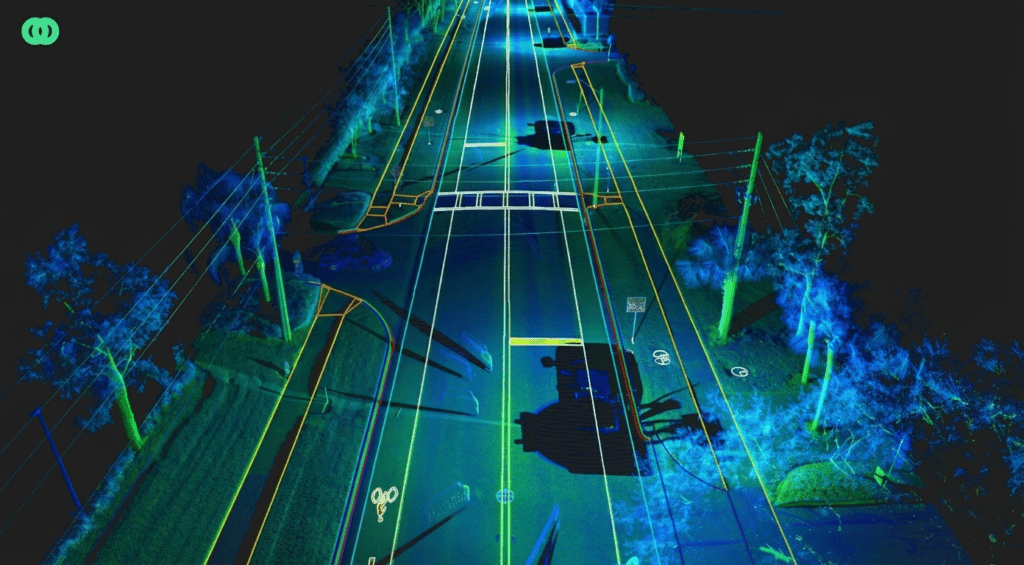
Advanced AI Classification in LiDAR: Turning Point Clouds into Real Decisions
LiDAR has changed how we see the world. But raw point clouds alone do not deliver value. The real impact comes when you can classify every point accurately and fast, then turn that data into decisions for planning, design, and operations.
That is exactly where advanced AI classification in LiDAR is transforming the game for asset owners, utilities, EPCs, and city planners around the world.
Why Traditional Point Cloud Classification Is Breaking
If you’ve ever delivered a large LiDAR project, you already know the pain:
-
Millions or billions of points.
-
Long manual classification cycles.
-
Inconsistent results between different technicians.
-
Delays for engineers who just want “clean, ready-to-use” data.
Manual or semi-manual point cloud classification simply doesn’t scale for utility mapping, powerline surveys, road corridors, or smart city digital twins. It consumes time, budget, and the energy of your best people.
As survey volumes increase, the only sustainable way forward is AI-powered LiDAR classification — combining deep learning with geospatial experience to automate the heavy lifting.
What Is AI Classification in LiDAR?
AI classification in LiDAR uses machine learning and deep learning models to automatically detect and label features inside a point cloud:
- Powerlines, poles, and vegetation
- Buildings, roofs, and facades
- Ground, road surfaces, and street furniture
- Utility infrastructure, topographic features, and terrain
- Oil and gas assets, process facilities, and pipeline corridors
- Subsea infrastructure, offshore structures, and marine survey features
Instead of a human drawing boundaries and assigning classes, the model learns patterns in geometry, intensity, and context, then applies those rules consistently across the entire dataset.
For complex utility networks or dense urban areas, this can mean days of work reduced to hours with better consistency.
How GeoSoft Global Uses AI to Classify LiDAR Point Clouds
At GeoSoft Global, AI is not a buzzword; it is built into the production workflow. We use advanced AI / ML pipelines to classify LiDAR point clouds from 3D laser scanning, mobile mapping, and aerial LiDAR surveys into clean, structured datasets that engineers can trust
Our AI-driven LiDAR classification solutions are tightly integrated with:
-
3D Laser Scanning for refineries, power plants, and industrial facilities.
-
Subsea and offshore survey data where dense point clouds need fast interpretation.
-
Digital twin programmes where accurate geometry and asset classes are critical for analytics and simulations.
-
GIS and smart city initiatives, aligning classified point clouds with enterprise GIS layers for planning and operations.
Key Benefits of AI-Powered LiDAR Classification
1. Higher Accuracy with Fewer Errors
Deep learning models are trained on large, annotated LiDAR datasets to learn feature-specific geometric and contextual patterns. Once optimized, they can improve classification accuracy, reduce manual post-processing, and produce consistent outputs across large-scale point cloud datasets
-
Detect subtle differences in geometry and elevation.
-
Reduce misclassification between similar objects.
-
Produce consistent results project after project, even when teams change.
This level of repeatability is almost impossible with purely manual workflows.
2. Greater Efficiency and Faster Delivery
AI automation converts what used to be a bottleneck into a scalable process:
-
Large utility corridors can be processed in parallel.
-
Turnaround times shrink from weeks to days.
-
Survey teams spend more time on quality control and less on repetitive clicking.
For clients, this means earlier access to data, faster design cycles, and the ability to take decisions when they matter most.
3. Richer Insights for Real-World Decisions
AI classification is not just about cleaner point clouds. It unlocks analytics:
-
Clearance and proximity analysis for powerlines.
-
Vegetation encroachment and risk scoring.
-
Change detection across multiple survey campaigns.
-
Asset condition indicators feeding into digital twin dashboards.
When combined with platforms GIS for asset management, AI-classified LiDAR becomes part of an end-to-end geospatial intelligence ecosystem.
From LiDAR to Digital Twin: Closing the Loop
A modern digital twin needs more than a photorealistic 3D view. It needs structured, classified geometry that systems can reason over:
-
LiDAR data capture – terrestrial, mobile, aerial, or subsea.
-
AI processing and classification – automated feature recognition.
-
Scan-to-BIM or GIS integration – models in Revit, Navisworks, or enterprise GIS.
-
Digital twin platform – IoT, analytics, and operations dashboards.
GeoSoft Global’s Digital Twin solutions connect these layers, using AI-classified point clouds as the geometric backbone for reliable operations, maintenance, and planning.
Real-World Use Cases
AI-based LiDAR classification is already delivering value across multiple sectors:
-
Utility Mapping – Automatically classifying poles, conductors, and vegetation for large power corridors, enabling proactive maintenance and outage risk reduction.
-
Urban Planning & Smart Cities – Integrating point cloud classification with GIS for engineering and smart cities to support zoning, mobility, and infrastructure decisions.
-
Topographic & Engineering Surveys – Differentiating ground, structures, and infrastructure for highways, rail, and industrial sites.
-
Infrastructure Management – Feeding accurate asset geometries and conditions into asset management systems for lifecycle planning.
Why AI Classification Needs Human Expertise
AI doesn’t replace surveyors and engineers — it amplifies them.
The best results occur when:
-
Domain experts define the classes that matter for design, safety, and operations.
-
Data scientists and geospatial engineers tune the AI models to those needs.
-
Quality control teams validate results and keep improving the training datasets.
This human-in-the-loop approach is how GeoSoft Global ensures that every AI-classified point cloud still meets strict engineering and HSE standards demanded by energy companies and EPC contractors worldwide.
Why Partner with GeoSoft Global
GeoSoft Global brings together:
-
Over three decades of geospatial and surveying experience.
-
Advanced 3D laser scanning, aerial LiDAR, subsea acoustics, and high-precision survey technologies.
-
A proven track record delivering digital twins, GIS platforms, and AI-enabled workflows for energy companies, EPC contractors, and government agencies worldwide.
We don’t just classify point clouds — we deliver actionable geospatial intelligence that supports safer, smarter decisions across the asset lifecycle.
Read our blog: Benefits of 3D Laser Scanning for Industrial Facilities
Ready to See AI Classification in Action?
If you’re still relying on manual LiDAR classification, you’re leaving time, insight, and competitive advantage on the table.
Visit GeoSoft Global – Digital Solutions to explore our full range of AI-powered LiDAR, 3D laser scanning, GIS, and digital twin services.
Case Studies: Real-World Case Studies | Geosoft Global
Or reach out directly with your next utility mapping, urban planning, or infrastructure survey project — and let our team show you what advanced AI classification in LiDAR can do for you.