
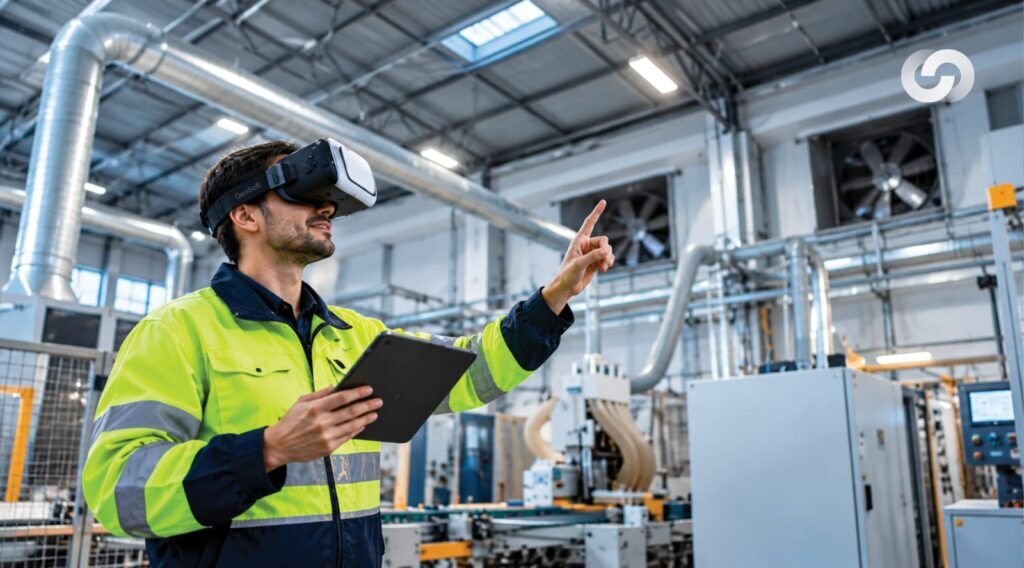
Refinery Asset Management Cannot Rely on Outdated Information
A refinery operates on a constant balance of uptime, process safety, asset integrity, production targets, and maintenance cost. Every unplanned shutdown, inaccurate drawing, late clash discovery, or unexpected equipment failure can affect production schedules, safety exposure, and capital expenditure.
Yet many refineries still manage critical assets through fragmented information: legacy 2D drawings, disconnected maintenance records, outdated P&IDs, isolated engineering models, and repeated site walkdowns. Teams are expected to make high-value decisions without a complete, current, and trustworthy view of the plant.
A digital twin for refinery asset management changes that model. By combining survey-grade 3D laser scanning, accurate as-built information, engineering data, operational telemetry, and intelligent analytics, a refinery digital twin creates a living digital representation of the physical facility. Teams can see the refinery as it exists today, understand asset condition, and test changes virtually before work begins on site.
At GeoSoft Global, this capability is delivered through Virtual Eye, an intelligent digital twin platform that brings reality capture, engineering context, operational information, and remote collaboration into one connected environment.
What Is a Refinery Digital Twin?
A refinery digital twin is a fit-for-purpose virtual representation of refinery assets, systems, and operating environments, synchronized with physical-site information and relevant engineering or operational data. In practice, it can combine:
- Accurate 3D laser scan data and point clouds
- Current as-built plant geometry
- Piping, equipment, structures, and access routes
- Engineering drawings, models, and documents
- Asset tags and maintenance records
- IoT, SCADA, and sensor data
- Inspection findings and integrity information
- Simulation, risk, and performance-analysis outputs
A reliable digital twin is not simply a 3D model or visual walkthrough. It is a connected engineering environment that supports monitoring, analysis, planning, forecasting, and operational decision-making. NIST notes that digital twins can help monitor status, detect anomalies, predict system behavior, and prescribe future operations.
For a refinery, engineers, maintenance personnel, integrity teams, project managers, and operations leaders can work from one shared understanding of the asset rather than relying on assumptions or obsolete documentation.
Why Refineries Need Digital Twins
Refineries are complex brownfield environments. Equipment is modified, piping is rerouted, supports are added, and layouts evolve over decades. The challenge is that information often sits in disconnected locations and is not aligned with the physical plant.
Common refinery asset-management challenges
- Outdated as-built documentation: Drawings may no longer reflect the installed condition of piping, equipment, structures, and access areas.
- Unplanned downtime: Degradation or integrity concerns may be identified only after performance is affected.
- Repeated site walkdowns: Teams return to the field to verify dimensions, access, and clearances.
- Modification clashes: Brownfield projects can meet physical clashes and routing constraints after execution starts.
- Fragmented asset information: Maintenance, inspection, engineering, and operational data stay disconnected across teams and systems.
- Safety exposure: Every unnecessary field visit increases exposure in live, hazardous, or restricted areas.
- Slow decision cycles: Projects stall while teams search for drawings or wait for manual verification.
From Reactive Maintenance to Predictive Refinery Operations
Traditional asset management inspects equipment on a fixed schedule and responds when issues become visible. A connected digital twin supports a more proactive model. Instead of asking what failed, teams can ask what is changing, what may fail next, and what to do before it affects production.
1. From outdated drawings to a living as-built record
An as-built 3D laser scan captures the refinery in its actual current condition, including equipment, piping, cable trays, steelwork, platforms, access routes, and surrounding constraints. Engineers work from the plant as it exists today, not from drawings created years ago.
The digital twin becomes the refinery’s single source of spatial truth.
2. From site walkdowns to remote engineering
With an accurate digital twin, much of the work that once required a site visit can be completed remotely. Teams can:
- Review equipment layout and surrounding constraints
- Measure distances, elevations, and clearances
- Identify possible routing options
- Review access and maintainability
- Plan shutdown work
- Coordinate multidisciplinary design reviews
- Prepare safer, more targeted field verification visits
- Share visual context with remote stakeholders
This does not eliminate field inspection. It makes field visits more purposeful, efficient, and less dependent on repeated measurement.
3. From calendar-based to condition-based maintenance
When the twin is connected to sensor data, inspection history, vibration readings, pressure data, temperature trends, corrosion monitoring, and maintenance records, it gives a clearer view of asset condition. This supports:
- Equipment-health monitoring
- Early identification of abnormal trends
- Risk-based maintenance prioritization
- Predictive maintenance planning
- Improved shutdown preparation
- Better use of inspection resources
- Reduced probability of unplanned failure
The goal is not to collect more data. It is to connect the right data to the right physical asset, in the right context, at the right time.
4. From brownfield uncertainty to validated modifications
A new pipe rack extension, pump replacement, skid installation, process tie-in, or platform modification must fit an existing environment that may not match legacy drawings. A digital twin lets project teams:
- Check physical clashes before fabrication
- Validate equipment fit and orientation
- Review pipe routing and support locations
- Assess maintenance access and operability
- Evaluate constructability constraints
- Plan lifting paths and installation sequences
- Identify risks earlier in design
- Reduce costly rework during execution
Design in the twin. Validate virtually. Execute with confidence.
The Role of 3D Laser Scanning in Refinery Digital Twins
A digital twin is only useful when it reflects the actual asset. That is why 3D laser scanning and reality capture are foundational to refinery digital-twin implementation. Scanning captures dense three-dimensional measurements that can be processed into point clouds, 3D meshes, intelligent models, and navigable digital environments.
For refineries, laser scanning can capture:
- Process units and pipe racks
- Vessels and tanks
- Pumps and compressors
- Heat exchangers
- Structural steel
- Electrical and instrumentation areas
- Access platforms and stairways
- Underground or above-ground interfaces
- Brownfield modification zones
The result is a trusted spatial baseline for engineering, maintenance, inspection, design, and operations. A twin built on incomplete or outdated information creates false confidence, which in high-risk industrial environments is worse than acknowledged uncertainty.
Virtual Eye: A Connected Digital Twin for Refineries
Virtual Eye is GeoSoft Global’s digital twin platform for organizations that need to move beyond disconnected models, drawings, and data sources. It brings together reality capture, 3D laser scanning, aerial LiDAR, engineering information, and operational data in a single contextual environment. For refinery asset management, it supports:
- Accurate plant visualization: Navigate a high-fidelity, reality-based representation of the refinery.
- Remote measurement and inspection: Review equipment, clearances, elevations, and access without repeated site visits.
- As-built asset intelligence: Connect spatial geometry with engineering documents, asset records, and operational context.
- Predictive maintenance workflows: Relate condition-monitoring information to physical assets and operational areas.
- Brownfield modification planning: Validate designs, routes, and constructability before execution.
- Turnaround planning: Improve planning, coordination, access review, and stakeholder communication.
- Remote collaboration: Let operations, engineering, integrity, and management teams review the same asset context.
- Simulation and what-if analysis: Assess potential changes before they affect the live facility.
Why Accuracy Is the Foundation of a Trusted Digital Twin
The quality of a digital twin depends on the quality, relevance, and governance of the information behind it. NIST work on digital twins for advanced manufacturing stresses data integration across machines, processes, and lifecycle stages, along with verification, validation, and uncertainty quantification. The ISO 23247 series likewise provides a framework for digital twins in manufacturing.
A refinery digital twin should define
- The assets, units, or systems in scope
- The required level of geometric accuracy
- The intended users and operational workflows
- The engineering and maintenance data to be connected
- The update process for future modifications
- The system integrations required
- Data-access roles and governance controls
- Validation and quality-assurance procedures
- Cybersecurity and operational-technology requirements
A Practical Refinery Digital-Twin Roadmap
A refinery does not need to digitize every unit at once. The most successful programs begin with a high-value use case and expand based on results.
Phase 1: Identify the highest-value problem
Prioritize areas where poor information, repeated field work, maintenance risk, or modification complexity creates the greatest impact, such as critical rotating equipment, high-maintenance units, frequent brownfield modification areas, turnaround-intensive units, corrosion-prone assets, congested pipe racks, and remote facilities.
Phase 2: Capture accurate as-built conditions
Use 3D laser scanning and reality capture to create a reliable spatial representation of the selected unit, asset group, or project area.
Phase 3: Build the contextual digital twin
Connect scan data with equipment information, engineering documents, asset tags, maintenance records, and relevant operational data.
Phase 4: Enable targeted workflows
Start with practical workflows such as remote inspection, clash detection, engineering review, turnaround planning, access review, or maintenance prioritization.
Phase 5: Scale through governance
Expand across more assets while maintaining clear data standards, ownership, update processes, validation procedures, and cybersecurity controls.
Digital Twin vs 3D Model: What Is the Difference?
A 3D model represents geometry. A refinery digital twin combines geometry with connected data, operational context, lifecycle information, and decision-support capability.
| Capability | 3D Model | Refinery Digital Twin |
| Visual representation of refinery assets | Yes | Yes |
| Accurate as-built geometry | Possible | Core requirement |
| Links to documents and asset records | Limited | Integrated |
| Sensor and operational-data connection | No | Yes |
| Condition monitoring | No | Supported |
| Predictive maintenance workflows | No | Supported |
| Modification validation | Limited | Strong capability |
| Remote operational decision support | Limited | Core capability |
| Lifecycle asset-management value | Limited | High |
Frequently Asked Questions
What is a digital twin in refinery asset management?
A refinery digital twin is a connected digital representation of refinery assets, equipment, processes, and operational environments. It combines accurate as-built geometry with engineering, maintenance, inspection, and operational data to support better decision-making.
How do digital twins improve refinery asset management?
They provide a shared, current view of the plant. They support remote engineering, condition monitoring, predictive maintenance, modification validation, turnaround preparation, and collaboration.
How does a refinery digital twin reduce unplanned downtime?
By connecting asset condition, operational data, and predictive analytics, a twin helps identify abnormal trends before failure. Teams can prioritize inspection and maintenance based on actual risk and equipment condition.
What is the role of 3D laser scanning in a refinery digital twin?
3D laser scanning captures the refinery as it exists. It creates the accurate as-built foundation for the twin, so teams can verify equipment locations, assess clearances, and plan modifications against actual site conditions.
Can a digital twin help with refinery modifications?
Yes. Engineers can design, review, and validate modifications in an accurate virtual refinery, identifying clashes, access limits, routing conflicts, and constructability risks before work begins on site.
Is a refinery digital twin the same as a 3D model?
No. A 3D model mainly represents geometry. A digital twin connects geometry with asset data, documents, operational information, sensor inputs, and engineering workflows.
What data can be connected to a refinery digital twin?
Depending on the use case: 3D scan data, CAD models, P&IDs, equipment tags, maintenance records, inspection reports, vibration, pressure and temperature data, asset registers, work orders, and engineering documents.
Why is as-built accuracy important in refinery digital twins?
Accurate as-built information ensures the twin reflects the physical refinery rather than outdated assumptions, which is essential for reliable engineering decisions, maintenance planning, and safe operational use.
How can GeoSoft Global support refinery digital-twin projects?
GeoSoft Global provides 3D laser scanning and reality capture, digital twin solutions, and the Virtual Eye platform to help refinery operators build accurate, connected, and practical digital environments for asset management.
Build a More Predictive Refinery Operation
The refinery of the future will be managed through accurate as-built information, connected asset intelligence, remote collaboration, predictive insight, and validated engineering decisions. A refinery digital twin provides the foundation for that shift.
With Virtual Eye, GeoSoft Global helps refinery operators transform physical plant information into an intelligent digital environment for better asset management, safer modifications, stronger maintenance planning, and more confident operations.
Ready to move from reactive refinery maintenance to predictive asset management? Talk to GeoSoft Global about your digital twin, 3D laser scanning, and refinery reality-capture requirements.